High-Level RCC Bridge: More Than Concrete and Steel
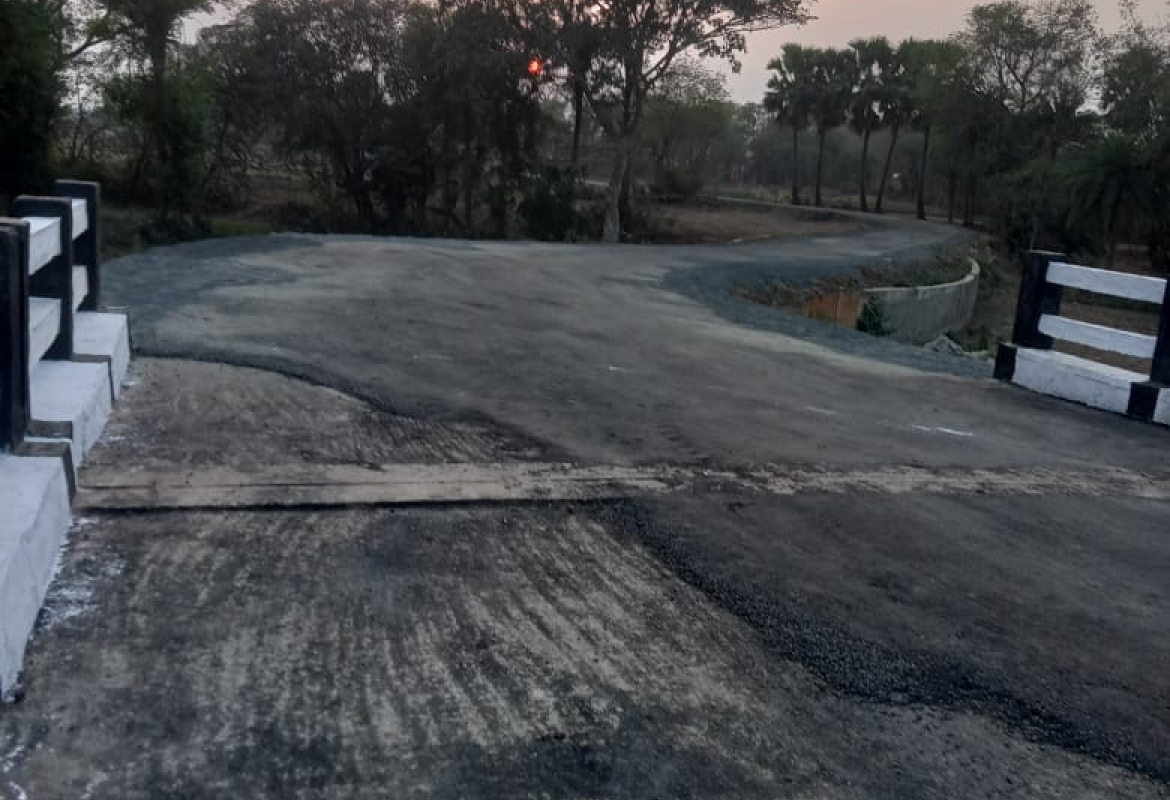
A bridge is not simply a structure that crosses a river.
It is a connection between people, communities, markets and opportunities.
For villages separated by rivers, a new bridge can reduce travel time. For farmers, it can provide better access to markets. For businesses, it can improve transportation. For emergency services, it can create a dependable route.
That is why High-Level RCC Bridge Construction is about much more than placing concrete and reinforcement steel. It is about creating infrastructure that is designed to serve people for years.
At Umesh & Manik Construction Pvt. Ltd. (UMC Groups), we believe that every bridge project begins with one fundamental objective:
Build it strong. Build it safely. Build it to last.
From Riverbank to Road: How a Bridge Takes Shape
Every bridge project has its own challenges.
The soil may be different.
The river may behave differently during monsoon.
The traffic requirements may vary.
The foundation conditions may change from one location to another.
A professional bridge construction process therefore starts long before the first concrete pour.
Survey
The first step is understanding the site.
Engineers study the proposed alignment, ground levels, existing roads, river characteristics and surrounding conditions.
Investigation
Soil and site investigations help determine an appropriate foundation system.
Design
Structural and hydraulic considerations are incorporated into the approved bridge design.
Construction
Only after planning, approvals and preparation does physical construction begin.
This systematic approach helps transform an engineering concept into a permanent infrastructure asset.
The Foundation: Where the Real Strength Begins
People usually notice the bridge deck and the road surface.
But much of a bridge's strength begins below the ground.
Depending on the approved design and site conditions, a High-Level RCC Bridge may use pile foundations, open foundations, well foundations or other suitable systems.
Foundation construction can involve:
- Boring or excavation
- Reinforcement cage installation
- Concreting
- Pile cap construction
- Foundation testing
- Dimensional and level checks
The foundation must safely transfer structural loads into the supporting strata.
A strong bridge begins with a properly designed and constructed foundation.
Building the Structure Above Water
Once the foundations are completed, the bridge begins to rise.
Piers and abutments provide the main support system for the superstructure.
Pier construction typically involves:
Reinforcement → Formwork → Inspection → Concrete → Compaction → Curing
Every stage requires attention to alignment, dimensions, reinforcement placement, concrete quality and workmanship.
The pier cap then provides the connection between the supporting piers and the bridge superstructure.
The Moment the Bridge Takes Shape
One of the most important stages of bridge construction is the installation of the RCC or prestressed concrete girders, where specified by the design.
Girders carry loads from the deck and transfer them to the supporting structure.
Girder erection requires careful coordination involving:
- Lifting equipment
- Skilled operators
- Engineers and supervisors
- Bearing positions
- Alignment
- Levels
- Safety arrangements
- Approved erection methodology
This is a stage where engineering precision and construction safety must work together.
The Deck: Where Infrastructure Meets Everyday Life
The deck slab is the part of the bridge that ultimately carries the roadway.
It is where engineering becomes something people experience every day.
Cars will cross it.
Buses will cross it.
Trucks will carry goods across it.
Children will travel to school across it.
Emergency vehicles will use it.
That is why deck construction requires careful control of reinforcement, formwork, concrete placement, levels, finishing and curing.
Concrete Quality Matters
Concrete is one of the most important materials used in RCC bridge construction.
Depending on the structural design, different concrete grades may be specified, such as:
M25 | M30 | M35 | M40
The actual grade and mix design must always follow the approved structural design and project specifications.
Quality management can include:
- Raw material verification
- Approved mix design
- Batching control
- Slump testing
- Concrete strength testing
- Reinforcement inspection
- Formwork inspection
- Proper compaction
- Curing
- Documentation
For major infrastructure projects, consistency is just as important as strength.
Monsoon, Water Flow and Bridge Protection
Bridge construction over rivers brings another major challenge: water.
River levels and flow conditions can change significantly during the monsoon.
Depending on the approved design, a bridge project may require appropriate protection works such as:
- Bank protection
- Stone pitching
- Aprons
- Scour protection
- Toe protection
- Guide structures
- Other erosion-control measures
These works help protect the bridge and its surrounding areas from erosion and hydraulic effects.
The Bridge Does Not End at the Bridge
A common mistake is to think of a bridge as only the structure over the river.
In reality, the project may also include approach roads and connecting infrastructure.
Approach construction can involve:
- Earthwork
- Embankment
- Compaction
- Granular layers
- Pavement
- Approach slabs
- Drainage
- Road safety elements
A beautifully constructed bridge is only useful when people can safely reach it.
Safety: The Responsibility Behind Every Structure
Bridge construction involves heavy machinery, lifting operations, excavation, working at height, concrete works and traffic movement.
Therefore, safety is not an additional activity.
Safety is part of construction itself.
A responsible bridge project should incorporate:
- PPE
- Barricading
- Safe access
- Equipment inspection
- Lifting safety
- Work-at-height protection
- Traffic management
- Excavation safety
- Emergency arrangements
- Toolbox meetings
Protecting workers and the public is an essential responsibility of every infrastructure project.
UMC Groups: Engineering Infrastructure for Tomorrow
Umesh & Manik Construction Pvt. Ltd. (UMC Groups) is based in Deoghar, Jharkhand, and works in the field of civil and infrastructure construction.
Our areas of interest include:
Bridge Construction
High-Level RCC Bridges, RCC Girder Bridges and associated bridge infrastructure.
Road & Highway Construction
Roads, highways, approach roads and related infrastructure.
RCC Structures
Foundations, structural concrete works and other RCC construction.
Infrastructure Development
Civil infrastructure projects designed to improve connectivity and support economic development.
Our philosophy is simple:
Quality is not a final inspection. Quality is a process followed from planning to completion.
Why High-Level RCC Bridges Matter for Rural Connectivity
For many communities, a bridge can change everyday life.
A shorter route can mean:
- Faster access to hospitals
- Better access to schools
- Easier transportation of agricultural products
- Improved access to markets
- Reduced travel time
- Better emergency connectivity
- Increased economic activity
Therefore, bridge construction is not only an engineering project.
It is a development project.
Our Approach to Bridge Construction
At UMC Groups, we believe successful infrastructure requires five important elements:
01 — Engineering
Every project starts with proper planning and technical understanding.
02 — Quality
Materials and workmanship must meet the approved project requirements.
03 — Safety
Workers, equipment and the public must be protected throughout construction.
04 — Technology
Modern construction equipment and appropriate construction techniques can improve efficiency and quality.
05 — Responsibility
Infrastructure built today should serve communities for many years.
Looking Beyond Concrete
A High-Level RCC Bridge may appear to be a combination of concrete, steel and engineering.
But its real value is measured differently.
It is measured by:
How many journeys become easier.
How many hours of travel are saved.
How many communities become connected.
How many opportunities become accessible.
That is the real meaning of infrastructure.
UMC Groups – Building Connections, Creating Possibilities
At Umesh & Manik Construction Pvt. Ltd., our goal is to contribute to India's infrastructure development through responsible, quality-focused and professionally managed construction.
From the foundation beneath the ground to the roadway above the river, every component matters.
Because a bridge is not built only to cross a river.
A bridge is built to connect the future.
Frequently Asked Questions
What is a High-Level RCC Bridge?
A High-Level RCC Bridge is a permanent bridge structure designed using reinforced concrete and associated structural systems to provide reliable connectivity across rivers, canals, railway crossings or other obstacles.
What concrete grades can be used in bridge construction?
The required grade depends on the approved structural design. Commonly specified grades may include M25, M30, M35 and M40.
What are the main components of an RCC bridge?
Major components can include foundations, piles, pile caps, piers, abutments, pier caps, bearings, girders, deck slabs, expansion joints, crash barriers and approach slabs.
What makes a bridge durable?
Durability depends on appropriate structural design, foundation conditions, material quality, concrete quality, reinforcement, workmanship, drainage, curing, protection works and proper maintenance.
Contact UMC Groups
Umesh & Manik Construction Pvt. Ltd. (UMC Groups)
Raj Palace, SSM Jalan Road, Bompass Town,
Deoghar, Jharkhand – 814112, India
Email: info@umcgroups.com
Website: www.umcgroups.com
Project Areas: Jharkhand | Bihar | West Bengal | Chhattisgarh | Madhya Pradesh
UMC Groups
Committed to Quality | Building Trust | Delivering Excellence